
My parents dropped me off at Texas Tech University in August, 1969, and were in Bangkok, Thailand a few days later. So, as a dependent of a military officer stationed overseas, I was eligible for space available travel to join them at the end of the school year. Consequently, in late May of 1970 I found myself at Travis AFB in California boarding a contract flight to Clark AFB in the Philippines. There were 8 other college students on the flight with me, and when we got to Clark we had to spend the night before going on. One of the students was the daughter of a general officer stationed at Clark, and he had us all over for steaks that night. I don’t remember a lot about that , except that he passed around shots of Grand Marnier liquor. My family didn’t drink alcohol and I had no idea what it was.
What it was, I discovered, was delicious. Perhaps that’s why I don’t remember much about that night. A day or two later I was deported from the Philippines and put aboard a flight for Bangkok. There weren’t a lot of flights out of Clark which didn’t go to Vietnam, and we students weren’t allowed to go to or over that country. To get us the priority needed for space available seats, we had to be deported. I still have the boarding pass which shows this fact.
I went by a liquor store this afternoon, and they were pouring tastes of Grand Marnier. I don’t believe I tasted that fine liquor between Clark and today. When it hit my tongue, I was instantly 18 years old and on a patio in the Philippines.

KC-135, Gear Up!
My first cut at the opening of Comet 21, a story of the cold war and a young tanker pilot. For more on the young pilot, see my first novel: Awol 21.
“Comet 21, cleared for takeoff Runway 6 Right, maintain runway heading , contact Departure Control 269.5 .”
The copilot, 2nd Lieutenant Tom Harter, replied in his best radio voice, trying to sound calmer than he felt, and perhaps more mature than his 22 years allowed, or like he had flown this big bird all his life, instead of just three months.
“Ah, roger, Comet 21 cleared for takeoff, maintain runway heading, departure on 269.5.”
The aircraft commander, Captain Rhett Cooper, eased the four throttles up just enough to get the KC-135A Stratotanker rolling toward the runway, then pulled them to idle as he rolled the nose wheel steering to the right, turning the big jet onto the runway. The jet was loaded to 287,400 pounds, peacetime takeoff maximum, and it seemed to waddle slightly in the turn.
“Takeoff checklist.”
Harter read from the checklist open on his lap. “Throttle brake.”
Cooper checked the position of the throttle friction lever. “Checked.”
“Lights – set.”
“Starter switches.”
Cooper flipped the switches. “Flight start.”
“Water boost pumps – start.”
“Throttles – set TRT”
Cooper took all four throttle levers with his gloved right hand and moved them forward slowly, watching the EPR gauges for each engine.
“Follow me through on the throttles.”
Harter put his left hand behind the throttles. The airplane started rolling down the runway. Cooper pushed the control column full forward.
The two pilots noted the EPR needles jump when the water injection started on each engine; at 2.3 EPR the Cooper took his hand off the throttles and tapped Harter’s hand, which was right behind his, and put both hands on the yoke. Harter pushed each throttle forward separately until each EPR gauge read 2.36, then placed his left hand on the quadrant behind the throttle levers.
The roar of the engines wasn’t as obvious in the cockpit under a helmet and headphones, but to the Supervisor of Flying, parked in a blue pickup truck at the runway’s midpoint, it was thrilling. He felt the disturbed air hitting him in waves of deep vibration. Black smoke poured out of the four J-57 engines and obscured the approach end from his view.
The 11,200 foot long runway sloped downhill at the start of the takeoff run, but at midpoint inclined enough to slow the acceleration, even causing the airspeed to decrease. Harter called the speed on the intercom: “115 Knots, 113, 115, 117.” Harter tapped the airspeed indicator, and Cooper smiled and nodded. At 145 knots Harter called “S-1.” All eyes were forward again as the speed increased and the jet hurtled towards the end of the runway. Finally, with only a thousand feet of runway remaining, the airspeed indicator read 175, and Harter called “Rotate” and Cooper pulled back on the yoke, and the nose rose, the wheels lifted off the runway, and they were airborne, and the end of the runway disappeared behind them.
“Gear UP.”
Cooper responded by raising the big landing gear lever, watching it until lights indicated the wheels were up and locked. He looked down as the runway, then the jungle, then a sandy beach receded below them, and then there was nothing but water ahead. The pilot continued the climb straight ahead, the initial altitude targeted was 1,000 feet above the ocean, where they would level and accelerate to climb speed of 285 knots.
It was a picture perfect takeoff, and the SOF turned his pickup truck around and went back to Base Ops.
Harter saw the red light in the number three engine fire t-handle illuminate. For a second, he wondered if he was imagining it.
“Copilot to crew, fire warning light number 3 engine.”
The aircraft commander responded immediately.
“Pull the #3 engine throttle to idle.”
As Harter retarded the number 3 engine throttle to idle, double checking that he had the correct throttle lever in hand before moving it. Cooper lowered the nose, switched off the rudder autopilot, and pushed on the left rudder as the nose swung slightly to the right.
The light was still illuminated.
“Shut down 3; pull the fire t-handle. Engine fire in flight checklist.”
Harter carefully selected the number 3 throttle, pulled the throttle lever around the detent, and put it in cutoff. He reached up to the t-handle, and then looked at Cooper again for confirmation. Cooper nodded, and he pulled the switch out. The engine fire warning light went out immediately. The engine was showing 10% RPM, wind-milling, shut down. They both relaxed for a moment.
“Declare an emergency. Dump fuel.”
Harter looked up from the checklist in his lap. Cooper pointed to the fuel dump switch. The copilot lifted the switch cover and flipped it up, then turned on the fuel pumps in the main body tanks. He looked back at his checklist again, and then performed the last item, tripping the #3 generator on the control panel on the roof of the cockpit.
“Guam Departure, Comet 21, declaring an emergency, returning to Anderson to land.”
“Roger, Comet 21, what is the nature of your emergency?”
“Number three engine fire, shut down.”
“Roger, Comet 21, turn right for downwind at Anderson.”
“Yeah, we’re dumping fuel, got to get rid of lots of this fuel before we can land.”
“Guam Departure, advise when you’re ready to land.”
“21.”
The jet was now 2,000 feet above the water, leaving a trail of JP-4 jet fuel behind as it flew a big circle around to line up with the runway. Harter wondered if the fuel would evaporate before hitting the water. Then he saw another light on the instrument panel illuminated.
“Copilot to crew, number 4 engine low oil pressure warning light is on.” He taps the number 4 oil pressure gauge, separate from the warning light. It indicates good pressure, but the warning light remained on. Two engines out on one sided? Dicey!
“God damn it!” The AC shakes his head. “Boom, you on?”
“Yes, sir.”
“Get that zebra up here and put him in the jump seat.” Cooper shook his head. “God damn it!”
The boom operator checked off and went to the back of the airplane, where 33 aircraft mechanics sat along both of the cargo compartment on uncomfortable fabric bench seats. In the center of the cargo area two huge J-57 engines were strapped down. The boom operator found the senior NCO, his fatigue shirt sleeves almost covered with chevrons, earning him the nickname “Zebra.”
In a minute, Chief Master Sergeant Ronald Kelsoe sat in the jump-seat, folded down between the pilot seats just aft of the center console.
The pilot turned to look at the Chief briefly, and then pointed to the #3 engine instruments, including the illuminated low oil pressure light, which had been coming on intermittently during the trip to Guam.
“We got 3 shut down, and then 4 oil low pressure light comes on. This makes me very nervous. Does it make you nervous?”
The Chief, not sure what to say, nodded in agreement. Cooper turned his attention back to the horizon ahead of them.
“Stop dumping fuel. We’re ok.”
Harter nodded and turned off the fuel dump switch. He checked the fuel totalizer; they had started with 165,000 pounds of fuel, now they are down to just over 100,000.
Landing weight of 207,000. Should be ok. Harter looked over at Cooper. Pretty fucking calm. Like he does three engine landings all the time.
They turned right and could see the runway a few miles ahead.
“Before landing checklist.”
“Speed brakes.”
“Zero.”
“Autopilot.”
“Off.”
“RGA Power and Speed Deviation switches, on.”
“Flaps?”
“Hold off, I’ll let you know. Max will be 30 degrees.”
“Roger.” “Guam Departure, Comet 21 turning final.”
“Comet 21, cleared to land Runway 6 Right. Crash trucks in position.”
“21.” Gonna get chased down the runway by the fire trucks!
The SOF, alerted to the emergency by Tower, pulled back onto the midpoint taxiway. As he stopped, an Air Force Blue ambulance pulled up behind him and the corpsman in the passenger seat got out.
“What’s up, boss?”
“Engine fire on takeoff, they’re coming in on three.”
The both turned to the left, where they could now see the tanker on a three mile final approach.
“They going to be OK?”
The SOF nodded. “Yeah. They’ll be OK. Cakewalk.” The corpsman went back to the ambulance.
Let’s hope so, anyway.
The jet touched down and rolled to a stop two thirds of the way down the runway, crash truck on either side, the ambulance, and the SOF. A tug from maintenance followed a blue pickup down the taxiway toward them.
Harter quickly ran through the After Landing and Engine Shutdown checklists as Sandy opened the crew entry hatch and put the ladder in place. Soon, the crew gathered around the number 3 engine, inboard on the right wing, and looked up at a six inch hole burned through the engine cowling.
Cooper stood with his hands on his hips. “Well, damn! There you go. Damned fire after all.”
The mechanics streamed out of the jet as the crew climbed into the SOF pickup for the ride to Base Ops.
“Back to the friggin BOQ. I wonder if they saved our rooms for us this time.” Cooper pulled a cigarette out of a pack in his left sleeve pocket.
“You got the hard luck bird, or the hangar queen, or what?” The SOF turned to look at Cooper, who just shook his head.
“First, we couldn’t get number 4 started. Then the main accumulator is leaking like a sieve. Now this.” He nodded to the back seat of the pickup. “My nav’s kinda spooked. And that’s not to mention the Dutch Roll out of Hickam.”
“You did a Dutch Roll?”
“Yeah, you should’ve seen it. Pretty wild. Totally fucking out of control. Climbing out of Hickam, four in a five ship. Eighteen thousand feet. It’s a wonder the troops in the back were willing to get back in the airplane.”
“I’d hate to be your DCM. I imagine he’s on the phone with Offut about now, getting his ass reamed.”
Cooper rolled the side window down and lit his cigarette. “Well, at least my copilot’s getting some good experience. He’s the FNG in the squadron.” He turned toward Harter, also in the back seat. “How much time you got in the 135, Tom?”
“Sixty hours. More or less. You mean it isn’t always like this?”
They all laughed, and the pickup pulled to a stop in front of a door marked “Maintenance Debriefing.”
Want to read some new flying stories?
I have another project in the works – I have been collecting stories from the Fredericksburg Ex Military Flyers Club and am putting them in a book. It is a big project. The first story will be Sam in a B-17 over Hanover with his airplane full of holes from the flak and a pair of Me-262 jet fighter lining on him. The last story? You’ll have to buy the book to find out. Stories come from all kinds of airplanes, from the UH-1 Huey helicopter to the C-5, but they all have this in common – there is a stick and there are rudder pedals and throttles.
There will be a print version and an e-book version. And you know something? They are real and true and honest.
I started writing Killer 21. I may change the title if I can think of a better one – we never used the same call sign twice and most weren’t actual words. I suppose that was to confuse the Russians. I am going to have to dig out my Dash 1 and inflight checklist, because I can’t remember a lot of that stuff. Like the “Engine Fire In Flight” checklist, which I ran it one time for real. I do remember what that life was like, and the story will be authentic. The protagonist will be 2nd Lieutenant Tom Harter, and if you have read Awol 21, you already know him.
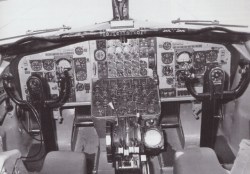
I’ve been working on the details of publishing a book lately, not writing, and I’m itching to get back to writing. Print copies of Fort Davis Rocks showed up on my porch this afternoon, so it is time to get back to work. What next?
Lately I have been remembering what it was like to fly the KC-135A in the 1970’s. The newer models of the airplane have computers and big freaking engines and precise navigation stuff and radar that can see weather – I’m sure they have challenges, but back then we were just one step above seat of the pants flying. The Cold War was on, and I was a young lieutenant, copilot on Combat Crew E-114 at Rickenbacker AFB, Ohio. I can hear the ice crunching under my winter boots; wind chilling me through a winter flight jacket and long johns; low, grey overcast skies; ice or freezing rain a constant threat. Pre-flights in the dark on cold mornings, the thrill of an alert taxi exercise, taking the runway number four in a five ship, setting the throttles as the airplane lumbered down the runway for an impossibly long takeoff roll.
Death always lurked close by, too – in the burned out hulks of airplanes just visible on the far side of the runway, in the night landing approaches with low ceilings and blowing snow, in the long flights over oceans with minimum nav aids and unexpected headwinds.
I think there is a story there. My working title could be Killer 21, a call sign I once had, and something of a joke, as we were usually unarmed. I’m going to get out my old Dash 1, the checklist, some photos. I’m going to put myself back in that place, and see what happens.
Enchanted Rock White will have to wait. There are some ghosts out there, beckoning to me, wanting their story to be told.

Fort Davis Rocks E Book
Years ago, when I was flying tankers in the Air Force, we often got back to the squadron after a mission late at night and spent some time getting our post-mission paperwork in order. Sometimes that meant re-writing the nav log or some other fabrication of official records, and we would often leave a stack of empty beer cans on the table to impress the morning flight planners. Our slogan was “The mission isn’t over until the paperwork is complete.”
In the business of writing, when you type “The End” you are just at the start of the hard work. Getting your novel ready for publication without professional help is a different skill set from writing it. Fortunately, I am multi-talented. To a certain extent. I hired Tatiana to do the e-book cover, as I couldn’t figure out how to do it myself. Nice! I spent a good deal of last weekend preparing it for Smashwords, and am well on my way to their premium catalog listing. The way to do it is follow their style guide, all 117 pages! I will make my three other books available through Smashwords, and I expect that I learned enough on this one to do the rest in half the time, maybe as little as 5 or 6 hours. By the way, Kindle and Nook are very simple in comparison – you just upload a Word document.
My first training in the tanker (KC-135A) was at Castle AFB, CA – a simulator session to learn the before engine start checklist – which took 3 hours (from midnight to 3 AM), about as tedious as going through the Smashwords style guide. But I still remember the start engines checklist – “Battery Switch – ON. Reserve Brake Pressure – Check.” Then it was turning 4 and off we went. Check out the book on Kindle or Nook – I am pretty sure that if you read the first couple of pages, I’ll have you hooked.
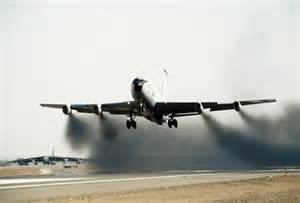
Here is a photo of the beast I spent a few of my formative years in:
 \
\
I may write a novel about flying that beast. There is a long flash-back scene in this novel of mine.
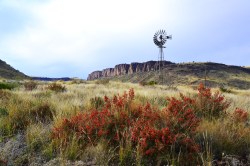
It is a pouring down rain Saturday in Fredericksburg, Texas, a place where rain is appreciated. I believe I have completed my fourth novel after about three years of messing around with it: Fort Davis Rocks. The story is set in the tiny town of Fort Davis, way out in west Texas; Rocks in the title refers to the landscape, strewn with ancient chocolate colored lava flows and site of the Davis Mountains. I have been listening to my writing critique group about it for three years, comments from test readers for several weeks, and bits and pieces of advice from Jami all along. I have made some revisions; there may be some yet to come, but they will be small. I have a terrific cover photo from my Fort Davis friend Carolyn Miller. I fired my friend Lee’s handgun to see what it felt and sounded like. I made a lot of trips to Fort Davis and walked miles of trails to get a feel for the place. I hung out at the bar at the Blue Mountain Bistro, and the Stone Village Tourist Camp. I talked to the park police officer of the time. I did a week of volunteer work at the old Fort.
I say it is a thriller but this is not a complete description – these days the category seems to be non-stop action. It doesn’t start with a murder or a mystery. There may be a bit too much sexuality for some readers, but it isn’t a romance. Each of the five main characters told me their story, and I just wrote down what they said: Delbert, police officer at the nearby state park; Gwynne, bartender at the town’s one bar; Raquel, daughter of a local rancher gone for 30 years, now a trial lawyer in Austin; King, a best selling writer; E W, banker; and Tail, motorcycle gang member who stayed behind the pack. The story begins and ends with the Rock House fire of 2011, making a one week long circle, but isn’t about the fire. 70,000 words, 30 chapters, 3 years.

Writer in his loft
I am working with a photographer for a cover image which screams Fort Davis to anyone who has been there. This is a start, but not the final image. I will have proof copies (my first attempt at that was flawed) in a few days, and will send them out to friends for comment. I can’t bear to look at it again. I have read it cover to cover several times in the last week and fixed lots of little details, and I need a vacation from the story.

This bird keeps showing up, so I wrote it into Fort Davis Rocks. I am very close to being finished.

Sleeping Lion Mountain, Fort Davis, Texas
I am re-working the ending of Fort Davis Rocks. I know what happens but I am messing around with different points of view, and POV happens to be the writing issue I have trouble with. Perhaps I can find someone to talk about POV for our next Fredericksburg Writers Conference meeting on September 25th. My story starts in Delbert’s POV, and makes a 7 day circle, and ends up in Gwynne’s POV back where it started. I think we all have trouble with POV and find it wandering around, but this is brilliant! But how to do it? Here is an on-line discussion on POV which seems simple enough for me to comprehend. Got to study this for a while. (May need a few beers for that.) Fortunately, I am meeting some people at the Pedernales Brewing Company this afternoon; I am going to write a blog post about them for the Friends of Enchanted Rock Blog. Beer plus Writing, a Win-Win!

I created this cover on the Create Space system. I had been thinking to get an artist to do a cover with a representation of the protagonist in front of the iconic rock face behind Fort Davis. Any opinions? I have ordered some copies for friends to read; I will have them in about a week. Depending on what these readers tell me, I may make changes to the story. The editor represents the reader’s interests; a friend told me this method could be crowd sourcing my editing.
I am getting better as I write more; this is novel #4. Maybe by 10 I’ll get that national best seller status!
 robertcdeming