
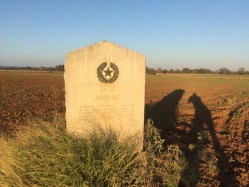
I spent way too much time writing my most recent post on Texas Hill Country, but I enjoyed every step of the way. First I had lunch with my friend Jim McCrae to get some stories – he knows lots of history and is the director of Fort Martin Scott. Then I gathered some information on the net – I quickly found a master’s thesis from Brigham Young University which had interesting details. I gathered some photos from the net which represented the story, but they weren’t just right, so I went to the Pioneer Museum and had an interesting discussion with Dr Lindley, the director, then took some photos of their model of Zodiac while the docent pulled out stories from a couple of their books for me. Then I went to MarktPlatz and photographed the water wheel erected at the 125th Anniversary remembering the Mormons at Zodiac and how they helped the fledgling community. This afternoon I wandered out east to find the original town site and the historical marker. In the process I met Elmer Schmitdzinsky, whose family has owned the land since 1895. Elmer is a genuine and interesting man who has scratched out a living on the farm most of his life, despite drought and floods and the vagaries of markets. He asked me if I had seen a picture of the marker; I replied that I had, and he told me I was welcome to walk to see it, but that’s all I would find, the same photo I’d seen. I didn’t tell Elmer, but I also go to those places to listen for voices from the past.
I didn’t hear any ghosts this time; all I heard was a gentle breeze and the whine of vehicles on Highway 290 a mile distant across the Pedernales River.
There is nothing left of Zodiac but stories. And a millstone.

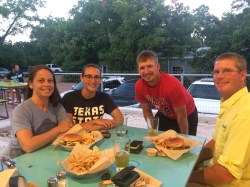
My latest post on Texas Hill Country.Com These are the biologists fighting the war on Arundo here in Fredericksburg, an impressive group of young people. This post may not be as popular as (any) post on Tiny Houses, but it is more important. I am grateful to Texas Hill Country.com for the opportunity to put this kind of information in their large network. My post was edited by Monica, the team leader in the photo who I have worked with on this project; I knew she was smart, but I was very impressed by her edits. If you know a young person looking for an interesting career in science who also likes to be in the outdoors, send this to them.
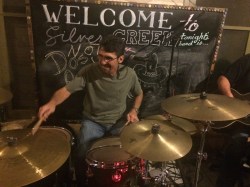
My latest post for Texas Hill Country.com, the beginning of a weekly series:
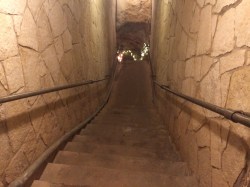
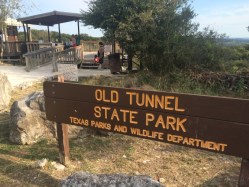
My latest post on Texas Hill Country.com on Old Tunnel State Park, just 14 miles south of Fredericksburg. Yesterday I revisited the park, going early to walk the entire trail. At 16 acres, this park is the state’s smallest but also records significant visitation. There is a ranger assigned to the park, but most of what happens is through a dedicated group of volunteers.

I received my copy of the Texas Hill Country print magazine today. I have two articles in this edition: Fall Colors in the Hill Country, in which I pair fall colors with nearby food/wine, and Fritztown, Party Town, Where Fun is Contagious – Oktoberfest 2016. I was pleased to be asked to write for the issue, as there is a lot of talent in the writer pool, and the editors are a delight to work with. Here are my posts on the blog for Texas Hill Country.com . The magazine will be available in a digital format at some point. I think my stories are creative and interesting, but photos are very important, and the bigger challenge for me. I’m working on several new stories for the blog – The Smallest State Park in Texas, and Underground Music.
The blog posts of 500 words are pretty easy; the challenge I am having as a writer at present are the 30,000 words in the middle of Enchanted Rock White, the third in my series of Enchanted Rock stories.
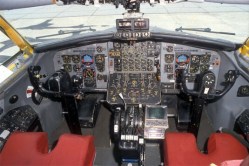
It was the summer of 1976, and my crew had flown a Tanker (KC-135A) from Rickenbacker AFB in Ohio to Eilsen AFB in Alaska. We got in trouble as we were unloading our bags into a pickup truck, which was allegedly parked too close to the airplane to not have chocks installed around a wheel, according to their regs. It was acceptable according to our regs in Ohio, but we got a ticket from an NCO in a pickup truck. To retaliate, we carried a set of wooden chocks around with us and put them around our feet when we went to Tanker Ops.
So Tanker Ops already knew we were a problem on our first day. Then, to show our disdain for the highly technical and serious nature of a mission, we attended the Top Secret briefing wearing bandannas over our faces. This did not go over well, either. Somehow, probably against the better judgment of the major who ran Tanker Ops, we picked up a training flight with an easy mid-morning takeoff time. Sweet! Soon we found ourselves flying around, sightseeing over central Alaska! We saw lots of trees and rivers and even Denali (Mt McKinley at the time). At this point I will confess that I was always a little surprised that they let us fly this big jet anyway. Dave, the Aircraft Commander, was 26; years old, I was the Copilot and 23, the Nav’s name escapes me, he was probably 26 or 27, and the Boom Operator, Sandy, was 19. Our reverie was interrupted by a call on the radio from Tanker Ops.
“Where are you guys? Your receiver is looking for you!”
“Receiver? We don’t have no stinking receiver.”
OK, we didn’t say exactly that, but you get my drift.
Apparently, there was an F-4 out there somewhere expecting us to meet him for some refuelling training, so we got his position and Nav gave us a heading. We should have been embarassed by the fact that we hadn’t flight planned for this, but we figured Tanker Ops forgot to tell us about it. To expedite the flight to the fighter and get to refuelling altitude of 28,000 feet, we pushed the throttles up to Military and started a descent from 33,000 feet. The air speed started to build. I looked at Dave and pointed to the Mach meter. He nodded. He was hand flying the airplane (autopilots get awfully boring) and it felt ok to him. I got out the flight manual and calculated our true Mach number, adjusting for temperature, I think. The gauge showed about .94 Mach but the true Mach number was .98! This was trans-sonic flight! We had heard stories about the early days of the jet, but this bird was 15 years old and starting to look worn. We had never heard about anyone flying a Tanker this fast! Dave and I didn’t say anything on the intercom because we didn’t want to alarm the rest of the crew, particularly the Navigator, we just looked back and forth at each other grinning and tapping the gauge. Dave wanted to push it just a little higher, but then we reached 28,000 feet and leveled off.
I should tell you about Navigators: they are very distrustful of pilots and their primary objective was generally to get out of the Air Force alive, and as soon as possible. My first Nav tried to bail out of the jet just off the coast of North Vietnam when they were getting shot at by gunboats. (I wasn’t on the crew yet, I showed up later.) Another of my Navs tried to resign his commission in Australia and go home on a boat. (The squadron commander told him his only choices were to fly or be sent to Leavenworth. He was so unappreciative of our piloting skill that he wore his parachute the whole rest of the TDY with his survival kit next to him on the floor.) One of my Navs routinely showed for O-Dark Thirty briefings smelling like bad tequila. Another made a game out of it – during his part of the briefing, he would point out a spot we were going to overfly at which an important event had occurred 100 years earlier. He also tried, and failed, to get us to learn and play bridge with him on those long weeks of Alert duty.
Back to our near supersonic run – the jet never made any funny noises and nothing fell off, which was a relief. We met up with the F-4 like it was perfectly normal to forget a refuelling and finished the flight doing 60 degree steep turns a few miles from the base for reasons which weren’t clear to me. Perhaps Dave wanted to show off his piloting skills because he thought he was shit-hot, but this made the Nav even more nervous and distrustful.
Dave was, in fact, a shit-hot pilot, he never made an error, except in judgement, and none of those resulted in a bent airplane or failed mission or busted checkride. He got away with all his shennagans and flew until retirement with an airline. We pilots thought the Air Force gave us airplanes to have fun with, and the darker the clouds and more crazy the situation, the more fun it was. Even Tanker pilots swaggered a bit coming back into the squadron after a flight in which everything went wrong, but in which you got the mission accomplished and brought the bird back in one piece. The Nav successfully survived his time in the Air Force and moved far away and changed his name.
Eyeballing thunderstorms (we didn’t have weather radar), being a little bit lost sometimes, going missed approach at minimums because you couldn’t see the runway, running short of gas, and those finicky water injection pumps for takeoff thrust augmentation were just part of the life. The pilots these days, they’ve got it easy – engines which put out more thrust than they need, instead of less. Weather radar! Computerized everything! GPS! But they don’t have Navigators, and that just doesn’t seem right.

I wrote a piece for Texas Hill Country.com but am not able to reblog it, so here is a link. This river is one of my favorites, always a good choice.
 robertcdeming