
he spoke in colors
by Robert L Schwarz, from his memoir R L and Other Stories, used by permission.
In the summer of ’68 before going off to the army in September after being drafted, I frequently helped R L Merz load semi-trailer loads of posts – mostly big corner posts such as 10×10’s and 10×8’s and 8×8’s – in regular commercial cedar yards in Ingram and Mountain Home and Hunt and Utopia and Vanderpool and in and in independent chopper or landowner run yards scattered here and there in the Sabinal Canyon. The independent yards were not only post yards but were also temporary living sites for the choppers and their families. When RL and I loaded out on those yards all the men and the older kids when not in school and even some of the women most often would be out in the cedar brakes cutting posts leaving only women with small children in the tents and trailers and ramshackle huts clustered around the temporary cedar yard but occasionally the men would be in camp, too, waiting for the ground to dry out after prolonged or flooding rains or waiting for the landowner’s OK to start cutting some new area or having a group work day on the yard and/or camp.
The men all knew and respected RL and would crowd about him discussing all manner of things and wanting his input on certain points but I was new to them and they were respectful towards me but were standoffish and left my largely to myself. The one exception was a young man about 17 years old – Ben was his name – who from our first meeting took an interest in me and wanted to know everything about me and my life – where I was from and why I was helping RL and what I did otherwise when not loading posts and where I went to school and what kind of truck I had and where I went to school and what kind of truck I had and where I cut posts and who I worked with when not with RL. I took a liking to him immediately and talked to him openly and without hesitation in spite of RL’s warnings to be very careful with my words and actions round these self-reliant, fiercely independent, clannish, uneducated-as-far-as-formal-schooling-goes people who lived a very simple life largely isolated from the outside world. My time with Ben was limited since I came and went with RL but I did see and talk to Ben fairly often during that summer. On those days when the rest of the choppers were in camp just sitting in hard wooden chairs in the shade or squatting on their haunches in small groups chewing tobacco basking in the overwhelming luxury of not having to work for a half or full day, Ben would voluntarily help RL and I load out posts talking a mile a minute all the while in spite of the arduous work and if RL went out with one or more of the choppers for an hour or two to deal with some problem in the brakes or to check out some new stand of cedar timber Ben and I would ride around in his father’s old truck exploring caves and Indian mounds and springs gushing out of the canyon walls. He always had something new and exciting he wanted to show me.
Tall at slightly over six feet; slender maybe 160 pounds, muscular with the long, thin untiring muscles of the fields and cedar brakes; sharp features; large intense brown eyes, short scissor cut brownish hair; smooth faced without even a hint of a beard; short upper body with long legs; floppy battered grey felt hat with a high crown and wide brim turned downward all around; work worn scarred calloused hands with long fingers liberally coated with the blackish tar like cedar resin; leathery skin – Ben was the archetypical cedarchopper. He lived with his family in a roughly build corrugated tin shack with packed dirt floors divided into two rooms by blankets hung from the rafters with baling wire – their water was carried from a nearby creek in buckets – their lights were kerosene lanterns – their cooking stove was a wood burning box heater – they slept on thin pallets on the floor – their outhouse was a rudely constructed tin and cardboard structure that sat back in the trees and was shared with others as necessity dictated – in winter they burned wood – lots of wood – to keep warm because the only thing between them and the freezing cold was a sheet of tin.
The oldest of six children – all boys – Ben had worked in the cedar brakes from the time he was old enough to follow along behind his dad. His dad wanted Ben to have at least an elementary school education but after the third grade the necessity of making a living overshadowed everything else and Ben simply worked with the family as they moved here and there following the cedar brakes.
Bright – questioning – full of life – Ben had made the best of what formal schooling he completed. He had learned how to add and subtract figures from school and picked up basic multiplication, operations with fractions and measurements largely through watching others and trial and error figuring cedar tickets and working as a carpenter’s helper and other outside jobs.
Above it all – what really interested him – was colors – you know – colors – like red and green and blue and white and purple and pink and black and yellow – colors – from the first paraffin wax crayons to later more sophisticated mediums – he loved colors. Colors aroused his imagination and enlightened his drab work centered daily life and inflamed his creativity. He was not retarded – he was not developmentally challenged – he was not a slow learner – he was not developmentally challenged – he was not a slow learner – he just loved colors – they spoke to his innermost being – everything in his post elementary life revolved around colors – he loved colors – he talked colors. To munderstand him – to understand what he was trying to communicate – you had to listen very carefully – you had to adapt to his ever changing color associations – you had to choose the correct color interpretations given the moment and the situation in which they were used. Many of the individual colors he spoke of had three or four possible interpretations with the ultimate meaning dependent upon the context – the surroundings – of their use at the moment.
He would say ====== which meant
“I’m purple and white: ===== he was happy and joyful with life.
“I’m green of him: ===== jealous or envious of some other guy having a certain girlfriend or having a new chain saw or driving a newer truck.
“Oh, my, is she every pink” ===== that’s one beautiful woman.
“Stand by me blue” =====stand by me in some dispute or argument or confrontation – be loyal to me.
“I’m blue goin’ on black” ===== to be depressed, down in the dumps.
“It’s a blue day” ===== it’s a cold, miserable day.
“Boy, am I glad it’s yella” ===== happy for the sun to be shining after several days of rain and dreary weather.
“Let’s do it up red” ===== go have fun – play pool – drink beer – go to the movies.
“Damn, I saw red” ===== mad about something.
“I’m white on this” ===== I’m right, about this. I’m tellin’ the truth. I haven’t done anything wrong. This isn’t my fault. I’m sticking with this no matter what.
“That fella sure is orange” ===== that guy is a little off and you need to stay away from him [orange was his least favorite color]
“This is sorta gray” ===== don’t know about this. This is in some ways right – some ways wrong.
I lost touch with him when I was drafted and went off to the army but I did not forget him. Many times in training and even in Nam my mind would drift back to his “colors” talk and I would smile inwardly and my spirits would lift up no matter how bad the situation.
When I returned from Nam in April ’70, the cedar camp where I first met Ben was no longer there. I was again helping RL load posts in the Sabinal Canyon area and every place we went I always looked for Ben or his family or those people who had been with Ben and his family in that camp in ’68. Cedarchoppers are notoriously nomadic beings – always moving – following the good cedar brakes and whoever is hiring choppers. From month to month any given chopper could be found in Burnet or Johnson City or San Saba or Junction or Utopia or Mason or Sabinal or hundreds of other out of the way places.
After three or four months I one day spotted an elderly grizzled chopper in one of the yards who had been in the ’68 camp with Ben. The chopper recognized me and we talked of various topics for several minutes and I finally had a chance to ask him, “Where’s Ben?”
“Ain’t ya heard? After you’uns left, he whar drafted, too – he got kilt over thar in Nam – them gooks they kilt him – getting out of a hell-oh-cop-ter on one of them ah-salts – kilt him they did – shot him as he come out of the door they did – he fallen back into the hell-oh-cop-ter and they taken him back to a hospital real quick like but he whar done dead – a friend of his’n from over thar wrote his ma and tolt her about hit – his ma took hit hard she did – cain’t get it straight in her mind to this day – why her boy come home in a box – cries all the time.”
this fine young man
this cedarchopper
stood by his country blue
worked at doing what was right white
died in some LZ in Nam red
# # # # # #
colors
he spoke in colors.
I struck out in my search for programs for the Fredericksburg Ex Military Flyers Club meeting today. Next month we may have that WWII B-17 pilot, the month after we may have the V-22 Osprey pilot, but today we watched a video, and it turned out to be one of the best programs we have had, so I am sharing it with you.
Brian Shul came to my squadron when I was an ignorant young student pilot and told his story, and I have wondered about it ever since. Watching it is worth 59 minutes of your life. I saw the Sled but never flew one, but the T-38 photos made me homesick.
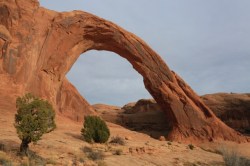
“The old moon, like a worn and ancient coin, is still hanging in the west when I awake.”
Edward Abbey, “Desert Solitaire, a Season in the Wilderness,” 1968.
Advice by the master Stephen King,”If you don’t have time to read, you don’t have the time (or the tools) to write. Simple as that.”
So that is what I have been doing for the last week, re-reading an old favorite by a master of description.
Here is the next sentence by Abbey:
“All night long the wind has been blowing, haunting my dreams with intimations of disaster, and in the east above the rim and mountains are salmon-colored clouds whipped into long, sleek, fishlike shapes by the wind.”
Abbey, who passed on to the next life in 1989, having not quite achieved my age of 63, left behind masterpieces of story telling and description. I wonder if this particular book could get published today; I think it might not, it is not a cohesive story, and may be difficult for novices to stick with, yet it consistently shows up in the Top 100 lists of book about the natural world.
Back to work. I am 22,000 words into a 72,000 word story, Enchanted Rock White. How do I know it will be 72,000 words? Because that’s where I always seem to run out of story, and my readers out of patience. The photo from Arches National Park, the setting of Desert Solitaire, is by my friend Mark Bilak, who mailed me a box of Abbey’s books many years ago when I was lost in the wilderness.

My character Paul in Enchanted Rock White, which is well underway, but not through the first draft yet, quit Facebook and Twitter in protest of their money-centric policies. He doesn’t think that anyone has noticed, and he isn’t very good at social situations, and he has yet no connections on the alternative, Ello. Paul is turning out to be a very interesting character, and he won’t be lonely for long.
If you know ello, perhaps you can be my friend, and show me how it works.
Ello’s new year letter to subscribers is attached, because I like the message:
|
Dear Ello Everyone, For me, New Year’s isn’t a time for resolutions (which I never keep anyway), but a time to reflect and celebrate how things are going, right here and now. From that perspective, 2015 was inspiring, empowering, and a hell of a lot of hard work. My friends and I launched Ello just over a year ago as a place of our own, without compromise. Without the influence of corporations that seek to manipulate what we see and think, and by doing so keep us on our knees. The mainstream press has lulled itself into believing that the scale of corporate influence on our lives isn’t a big deal — especially if we get something in return. But like bread and circuses offered by Caesar to placate a restless population, gifts doled out by billion-dollar corporations aren’t fairly distributed. Too few have too much power, money, and control. Exacerbating this is the fact that public corporations are legally bound to do whatever they can to maximize profit. In the case of mainstream social networks, they exploit the things we create to serve ads, and sell our personal data to anyone and everyone who wants to buy it. We’re the product that’s bought and sold. In 2016, big social media offers an unprecedented threat to creativity, privacy, and free will. Ello represents an alternative worldview. As a Benefit Corporation, Ello has a legal obligation to consider public interest in every decision we make. This community has grown into an oasis where people everywhere inspire one another to move the world forward. Not a place to control and manipulate, but a place to connect, create, and celebrate life. With this in mind, here are my wishes for you in 2016: * Break the rules. Thank you for helping us create such an inspiring, beautiful, positive, and real community. In 2015 we built the foundation. 2016 is when we blow the roof off! Much love, |
 |
|
Paul Budnitz
CEO & Co-Founder |

As we begin further (ill advised, in my view) intrusion of handguns into public life in Texas, I came across this by Edward Abbey in his book Desert Solitaire, A Season in the Wilderness (1968).
Suppose we were planning to impose a dictatorial regime upon the American people – the following preparations would be essential:
- Concentrate the populace in megalopolitan masses so they can be kept under close surveillance, and where, in case of trouble, they can be bombed, burned, gassed, or machine-gunned with a minimum of expense and waste.
- Mechanize agriculture to the highest degree of refinement, thus forcing most of the scattered farm and ranching population into the cities. Such a policy is desirable because farmers, woodsmen, cowboys, Indians, fishermen and other relatively self-sufficient types are difficult to manage unless displaced from their natural environment.
- Restrict the possession of firearms to the police and the regular military organizations.
- Encourage or at least fail to discourage population growth. Large masses of people are more easily manipulated and dominated than scattered individuals.
- Continue military conscription. Nothing excels military training for creating in young men an attitude of prompt, cheerful obedience to officially constituted authority.
- Divert attention from deep conflicts within the society by engaging in foreign wars; make support of those wars a test of loyalty, thereby exposing and isolating potential opposition to the new order.
- Overlay the nation with a finely reticulated network of communications, airlines and interstate autobahns.
- Raze the wilderness. Dam the rivers, flood the canyons, drain the swamps, log the forests, strip-mine the hills, bulldoze the mountains, irrigate the deserts and improve the national parks into national parking lots.
Idle speculation, feeble and hopeless protest. It was all foreseen nearly a half a century ago by the most cold-eyed and clear-eyed of our national poets, on California’s shore, at the end of the open rode. Shine, perishing republic.
Visionary or curmudgeon? Read Abbey at your peril.

My formal education began in 1956 in public school in the Village of Eriswell in the United Kingdom. The school day began with readings from the Book of Common Prayer; my copy was pocket sized and had a red cover. I could be wrong about this, but I believe the last page of the book included the words to the song God Save The Queen, which concluded our morning devotional. All the students, perhaps 40 or 50, stood in what amounted to the Great Hall for this programme.
So, while my contemporaries in the US were learning the Pledge of Allegiance, which was just becoming popular, I was learning God Save the Queen.
The school had two departments; I don’t know what they were called, I’ll just call them younger and older; I started with the young children (I was 4) with Mrs. Rigsby. My older sister Alice Adele started with Mrs. Donnan. This school is where I learned to write – block printing using a pencil, and later with a quill pen dipped in an inkwell. Each day before lunch we all went outside to use the outhouse (a very large structure with multiple seats over the pit) and lined up on the way back inside to wash our hands at a sink with cold running water. Lunch was provided by the school and was served at long wooden tables with benches. On my first day I learned how to properly use a fork, English style, on the insistence of Mrs Donnan. I don’t remember much about the meals except Christmas Pudding, which was a real treat, and a cake covered in treacle.
On the playground I learned to play rounders (like baseball) and had a shot at cricket. You couldn’t climb on the jungle gym unless you had a pair of rubber soled shoes called plimpsoles. I wore shorts every day and carried my papers and books in a leather satchel. From time to time we walked down the lane to the church, a distance of perhaps 200 yards, where we would sing in the choir loft with the accompaniment of the organ. The church was very old and was reputed to have a ghost, which had been seen playing the organ by Mrs Donnan, who was married to the pastor and lived in the parsonage next door. Reverend Donnan, who became a friend of my Dad’s, had been a prisoner of war of the Japanese in Burma on the infamous Death Railway. Years ago I read the non-fiction account of that experience in Through the Valley of the Kwai, and actually visited a piece of it at Kanchanaburi, in Thailand, with my Dad when we lived in Bangkok during the Vietnam War.
My best friend was Trevor Dodds, who lived in the village in a very old house with a thatched roof. Somewhere I have a photo of my 7th birthday party, which we had at the Eriswell Town Hall, around a birthday cake my mother made which resembled a train with several sections.
So, when I wonder how I got to be who I am, this is a piece of the picture, and a part of the stories I write. Like me, your story – and you- are unique, one of a kind.
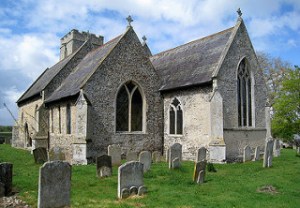
Eriswell Church
I have been told there isn’t enough color in my writing. Now I’m looking for colored markers to do this exercise.

 From kitchennostalgia.com
You know your writing should evoke all five senses, but here’s a handy tip for not only making sure you’ve included sight, sound, taste, touch, and smell in a scene, but also that you’ve balanced your use of the senses:
Color Coding for the Senses:
- Pick a passage from your writing.
- Pull out your highlighters or colored pens and assign one color to each of the five senses.
- Now, read the passage and use the appropriate color to highlight or underline each word or phrase that evokes a sense. If certain words or phrases evoke multiple senses, use both colors.
- Hold the paper at arm’s length for a quick and easy-to-read snapshot of how much sensory writing you have included and which senses you’re evoking.
- Based on what you see, go back to your piece and edit.
I most recently heard this piece of advice on an episode…
View original post 520 more words
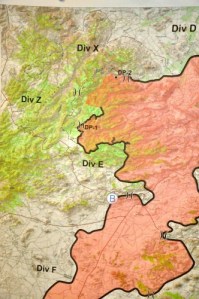
Map of Rock House Fire from Marfa Public Radio
I read an excellent post by fellow blogger and friend Jamie Wallace about starting a story in the middle. I’m sure I’ve read other stories told that way, just not the ones she referenced. Fort Davis Rocks starts at the moment in 2011 when a wildfire roared into the small west Texas town. I couldn’t see how to write the fire into the story; I couldn’t imagine what that was like. I listened to news reports on Marfa Public Radio, looked at aerial photographs taken by my friend Carolyn Miller, watched You Tube videos, read newspaper stories, and even stood on the ground beside my friend and Fort Davis denizen Randall Kinzie as he described what it was like. I solved the problem by making the story a loop; as the fire reaches the city limits, the story goes back one week, then comes back to the starting point. Brilliant! But like all my storytelling, the idea probably originated in my mind from something I read years ago, and surfaced just when I needed it. Reading Jamie’s description of the technique was enlightening. Thanks, Jamie!
 I actually did win an award – I was a finalist (top 5) in a Texas-wide Manuscript Contest held by the Writers League of Texas a couple of years ago. I finished that story and it eventually became Fort Davis Rocks. I think it is the best story I’ve written so far, although not everyone I know agrees with that; I think it may sit better with men than women. Soon after I completed it I began writing the next story. I took a course we called Shameless Self Promotion sponsored by the Fredericksburg Writers Conference, in which Eva Pohler showed us how she increased sales of her young adult Greek mythology based stories. I spent all day again today with Eva in an update of the process; refined, exhaustive, almost mind-numbing in its complexity.
So, I am refining and expanding my marketing efforts in the hope that I will reach many more readers, who will be charmed by the rugged beauty of west Texas and inspired by its rough hewn diverse people.
Writing a great story is just the beginning. Finding people to read it is the greater challenge.
Oh, I did get the award pictured on this post, but it was presented to my by the US Air Force, not WLT. I would have put a picture of that award on this post, but the award consists of little more than mention in the annual Conference program and 5 minutes of fame at the podium.
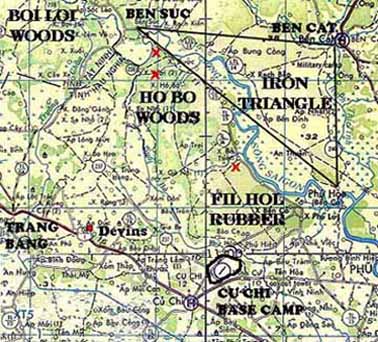
I had the opportunity to visit with my friend Robert Schwarz today. He said, “One of my goals as a writer is that one day, maybe in a thousand years, someone will pick up one of my books and read it all the way though to the end, without being able to put it down.” Well, Robert, that has already happened, you didn’t have to wait a thousand years.
Robert got through his time in Vietnam (Cu Chi,1969-1970) not by smoking marijuana or using heroin or alcohol or wanton sex, as so many did, but by reading: the classics – in the field on missions, in the bunker, waiting for the next big thing. He read Faulkner during his time in the war, poignant truth for a soldier who cannot leave the war behind, much less forget it, even for an hour, or a single night. This is one of those quotes:
“The past is never dead. It’s not even past.”
― William Faulkner, Requiem for a Nun
I have copies of his memoir, Leaving the Nam, available only from him by a request in the mail, or from me. $15 includes shipping. He has no real email address, doesn’t own or use a computer, and wrote some of this story on feed sacks on his tractor in the Texas Hill Country.
From the back cover – “These stories – sometimes boring, – exciting – terrifying – depressing – moving – provoking – will allow you to feel what it is like to be immersed in an experience so completely – immersed in the war in Nam so completely – that you the individual cannot tell where the outward experience ends and your own inner natural being begins as all the guys felt – all the guys who were there.”
 robertcdeming